A 15-year mortgage pays off a home loan in half the time of a 30-year loan, with far less total interest but a noticeably higher monthly payment; the right pick depends on what your monthly budget can absorb.
In my experience guiding home buyers through this exact decision (see my background), that payment gap, often over $1,000 a month, is the real deciding factor.
Still, the higher payment can strain cash flow fast, so affordability matters more here than the lower rate.
15-Year vs. 30-Year Mortgage at a Glance
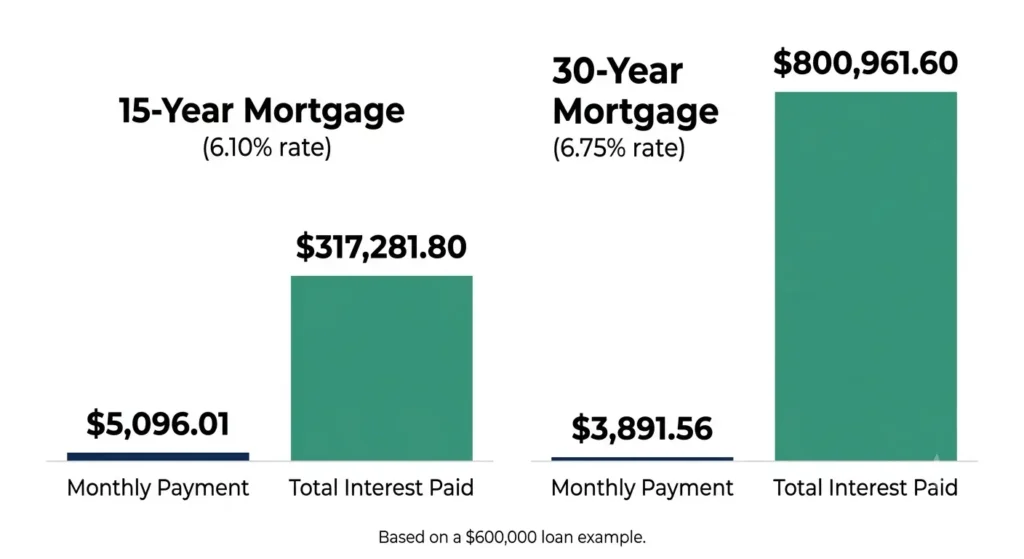
Average 30-year rates sit near 6.75%, 15-year near 6.10%. On a $600,000 loan, that gap runs about $1,200 more per month for the 15-year, and roughly $480,000 less in total interest over the life of the loan.
Quick Comparison Table
| Feature | 15-Year Mortgage | 30-Year Mortgage |
|---|---|---|
| Loan term | 180 payments | 360 payments |
| Typical rate (2026) | ~6.10% | ~6.75% |
| Monthly payment ($600K loan) | ~$5,097 | ~$3,892 |
| Total interest paid | ~$317,460 | ~$801,120 |
Which Mortgage Is Better?
30-year wins on affordability and flexibility. 15-year wins on long-term savings and equity. There is no universal winner, only the winner for your situation.
Quick Decision Guide
Choose 15-year if your budget handles the higher payment and you want debt freedom fast. Choose 30-year for lower risk, more cash on hand, or if you are unsure how long you will stay. The real deciding factor is cash flow, not the rate.
What Is the Difference Between a 15-Year and 30-Year Mortgage?
Same loan, different length: 180 monthly payments instead of 360.
Loan Term Explained
A 15-year mortgage is 180 fixed payments. A 30-year is 360. Pick the 15-year and you own the home outright in half the time. Both are usually a fixed-rate mortgage, unlike an ARM mortgage, where the rate can reset higher after a few years. See our full fixed vs adjustable rate mortgage comparison for how that risk plays out.
Why Loan Length Changes Everything
Shorter terms mean bigger payments but far less interest. Longer terms mean smaller payments but interest piles up twice as long. Equity grows faster on a 15-year loan since more of each payment hits principal early, a split explained in our principal vs interest breakdown. Lenders also weigh loan length when deciding how much income you need to qualify.
15-Year vs. 30-Year Mortgage Comparison Table
Side by side, the numbers tell the story better than words.
Side-by-Side Feature Comparison
On a $600,000 loan, the 15-year clears itself in half the time and builds equity almost twice as fast, even though the required payment runs higher. That faster payoff is the whole trade you are making for the extra monthly cost.
Financial Impact Comparison
The 30-year frees up about $1,200 a month for savings or an emergency fund, cash the 15-year borrower cannot touch until payoff. The 15-year carries less long-term risk since you owe less, sooner. The 30-year is simply more affordable for most families, which is why it gets approved more often.
Monthly Payment, Interest, and Total Cost Comparison
One clean example settles this fast.
Example Using the Same Loan Amount
Same $600,000 loan, same down payment, both terms. 15-year at 6.10%: about $5,097 a month, $917,460 total. 30-year at 6.75%: about $3,892 a month, $1,401,120 total, nearly half a million more. If you want to run your own numbers, our guide on how your mortgage payment is calculated walks through the formula.
Why the Costs Are Different
Interest charges on whatever balance you still owe, a mechanic covered in detail in how mortgage interest works. A 30-year keeps a bigger balance outstanding far longer, so interest compounds against you for years. A 15-year crushes that balance fast, cutting the interest clock short. The extra $1,200 a month buys you out of decades of interest.
Interest Rates and Mortgage Amortization Explained
Rates and amortization explain why the math plays out this way.
Why 15-Year Rates Are Usually Lower
Lenders see 15-year loans as safer, since they get repaid faster. That lower risk earns a rate usually half a point to three quarters below the 30-year rate. As of early August 2026, Freddie Mac’s weekly survey puts average rates near 6.75% for 30-year and 6.10% for 15-year, a gap that has held most of the year.
How Amortization Changes Your Costs
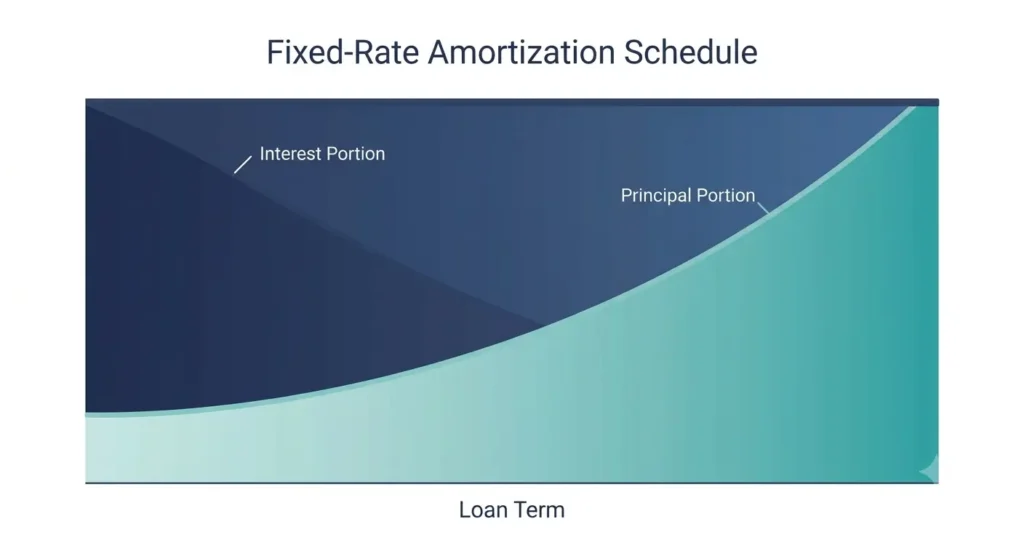
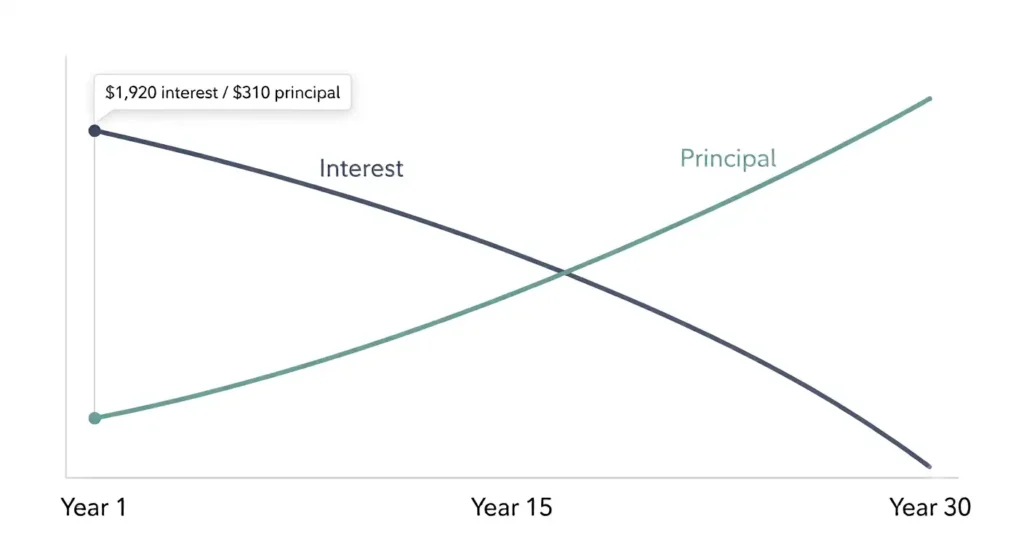
Early payments go mostly to interest, not principal. On a 30-year, that imbalance drags on for over a decade. On a 15-year, principal takes a much bigger share from payment one, which is why the balance drops so much faster. Our mortgage amortization schedule guide shows this month by month.
Which Mortgage Saves More Money?
Short term and long term pull in opposite directions, and both matter.
Short-Term Financial Impact
The 30-year protects monthly cash flow. That extra $1,200 a month can cover a job loss or a repair without panic. Flexibility today often matters more than savings you will not feel for fifteen years.
Long-Term Financial Impact
The 15-year clears the debt fastest: about $480,000 saved in interest, and the home paid off in half the time. Faster payoff means faster wealth building.
Which Mortgage Is Right for Your Situation?
Life stage decides this more than any spreadsheet.
First-Time Homebuyer
Go 30-year almost every time. You need the flexibility while still building savings and learning real homeownership costs, all covered in our first-time home buyer guide.
Long-Term Homeowner
Staying for decades? The 15-year pays for itself many times over: massive interest savings, faster equity, mortgage-free retirement.
Planning to Move Within 5–10 Years
Lean 30-year. A 15-year builds equity faster, but you won’t stay long enough to capture the big interest savings.
High-Income Household
If the higher payment is easy, the 15-year is a smart wealth move, forced savings through equity plus hundreds of thousands less in total interest.
Variable or Uncertain Income
Freelancers and commission earners should lean 30-year. The lower fixed payment gives room in slow months, and you can still pay extra when income is strong.
Can You Get a 30-Year Mortgage and Pay It Off Like a 15-Year?
Yes, and many of my clients do exactly this.
How the Strategy Works
Take the 30-year for the lower required payment, then send extra toward principal whenever you can. Even $500 extra a month shaves years off the loan and cuts interest significantly.
Benefits and Limitations
Best of both worlds most months: low required payment, option to pay more. If money gets tight, drop back down with zero penalty. Stop the extra payments altogether and the loan simply reverts to its original 30-year schedule. The catch: your rate still sits at the higher 30-year level, and it only works with real discipline.
Can Investing Beat a 15-Year Mortgage?
The question I get asked most by clients who are good with money.
The Opportunity Cost Question
Your mortgage rate is 6.10%. Stocks have historically returned 7% to 10% a year. Investing the difference could beat the loan on paper, but paying down the mortgage is a guaranteed return. Investing is not.
When Each Strategy Makes Sense
Maxed retirement accounts, six months of savings, comfortable with market swings? Investing the difference can make sense. Want certainty and hate market risk? Pay the mortgage down faster instead. Either path feeds retirement planning too, since a paid-off house lowers fixed costs right when income typically drops. A fixed-rate loan also holds steady against inflation while your paycheck usually rises.
Qualifying for a 15-Year vs 30-Year Mortgage
In my experience, approval standards shift more than buyers expect, depending on the term.
Debt-to-Income Ratio Differences
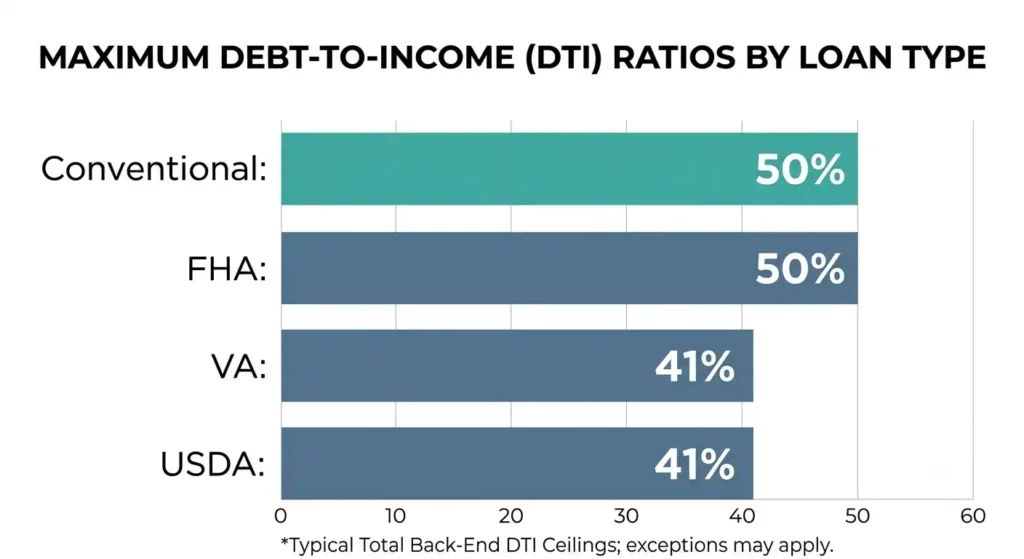
The bigger 15-year payment pushes your debt-to-income (DTI) ratio higher, which can shrink how much house you can afford. The ceiling shifts by loan type: conventional caps near 45% (sometimes 50% with strong compensating factors), FHA around 43%, VA no hard cap but usually near 41%, USDA close to 41%, figures the Consumer Financial Protection Bureau explains in more detail. A conventional mortgage is backed by Fannie Mae or Freddie Mac; an FHA loan, VA loan, or USDA loan each sets its own ceiling, so ask your lender which program fits.
Credit Score and Loan Estimates
A strong credit score gets the best rate on either term, and the gap matters more on a 15-year. Compare Loan Estimates from at least three lenders since costs vary. Putting less than 20% toward your down payment for a house means private mortgage insurance (PMI) on either term, so ask when it drops off. Also ask about rate lock periods, prepayment penalties, and points.
Refinancing and Changing Loan Terms Later
Your first mortgage is not your last one.
Refinancing From 30 Years to 15 Years
Works well once your balance is down and income is up: lower rate, faster payoff, big interest savings. The catch: your payment jumps.
Refinancing From 15 Years to 30 Years
Useful when income drops or expenses rise. Lowers your payment immediately, but restarts the clock and adds interest over the new term.
Should You Wait for Lower Rates?
Nobody times rates perfectly. Run a break-even analysis instead: $6,000 in closing costs against $300 a month saved breaks even in 20 months. Past that, it is real savings.
Common Myths About 15-Year and 30-Year Mortgages
A few things I hear constantly from buyers.
A 15-Year Mortgage Is Always Better
Not true. Only if your budget handles it without wrecking other goals. No emergency fund left over is a risk, not a win.
A 30-Year Mortgage Always Wastes Money
Also not true. Extra principal payments close the interest gap on your schedule, while the extra liquidity funds opportunities a 15-year budget cannot.
Lower Interest Rate Means Lower Total Cost
Rate alone does not decide total cost. Loan term and payment size matter just as much, as our own numbers show.
How to Decide Between a 15-Year and 30-Year Mortgage
Answer these honestly.
Ask Yourself These Questions
Can you afford the higher payment without cutting savings? How stable is your income? How long will you stay in the home? Flexibility or long-term savings, which matters more?
Decision Checklist
- Review your full budget (see what PITI includes), including taxes, insurance, and homeowners association (HOA) fees and maintenance, since these hit either term the same way
- Keep three to six months of expenses saved
- Keep retirement contributions on track
- Weigh a likely job change, kids, or a move in the next five years, including childcare or college costs
Common Mistakes to Avoid
Mistakes I’ve seen cost buyers real money.
Choosing Based Only on Monthly Payment
A lower payment feels good today but can cost hundreds of thousands more in interest. Look at total cost, not just this month.
Choosing Based Only on Interest Savings
Chasing interest savings into a payment you cannot afford leads to house poor. Draining your emergency fund is not saving, it is risk.
Not Comparing Multiple Loan Offers
Rates, fees, and closing costs vary by lender even for the same term. Skipping comparisons can cost thousands.
Frequently Asked Questions
Is a 15-year mortgage always cheaper?
Cheaper in total interest, not in monthly payment. You need enough income for the bigger required payment.
Can I pay off a 30-year mortgage in 15 years?
Yes. Send extra toward principal each month and match a 15-year payoff while keeping the lower required payment as a safety net.
Why do 15-year mortgages usually have lower interest rates?
Less risk for the lender since the loan gets repaid faster.
Which mortgage builds equity faster?
The 15-year, by a wide margin, since more of each payment goes to principal from month one.
Is refinancing from a 30-year to a 15-year worth it?
Can be, once income has grown and rates are favorable. Run a break-even calculation on closing costs first.
How much more income do I need for a 15-year mortgage?
On our $600,000 example, roughly $1,200 more per month, about $35,000 to $40,000 more in annual gross income to stay within a comfortable debt-to-income ratio.
Is a 20-year mortgage a good compromise?
For some buyers, yes: lower payment than a 15-year, better interest savings than a 30-year.
Should I invest the payment difference instead?
Only with strong savings and comfort with market swings. If certainty matters more, pay the mortgage down faster.
Final Verdict: Should You Choose a 15-Year or 30-Year Mortgage?
No universal answer, only the right answer for your numbers.
Best Choice by Financial Goal
Lowest monthly payment: 30-year. Lowest lifetime interest: 15-year. Maximum flexibility: 30-year plus extra payments. Fastest debt-free ownership: 15-year.
Key Takeaways
The real tradeoff is affordability versus total interest cost. First-time buyers and variable-income earners usually do better with the 30-year. Long-term owners and high earners usually do better with the 15-year. Run your real numbers, check your savings, and pick the loan that lets you sleep at night. Once decided, get a mortgage preapproval, lock your rate, and compare final Loan Estimates before closing. Complex finances, self-employed, multiple properties, heavy debt, make a session with a fee-only financial advisor worth it. If you still have questions, contact us directly, or browse more guides in our mortgage basics category.
Further reading and site resources: post sitemap, page sitemap, category sitemap.